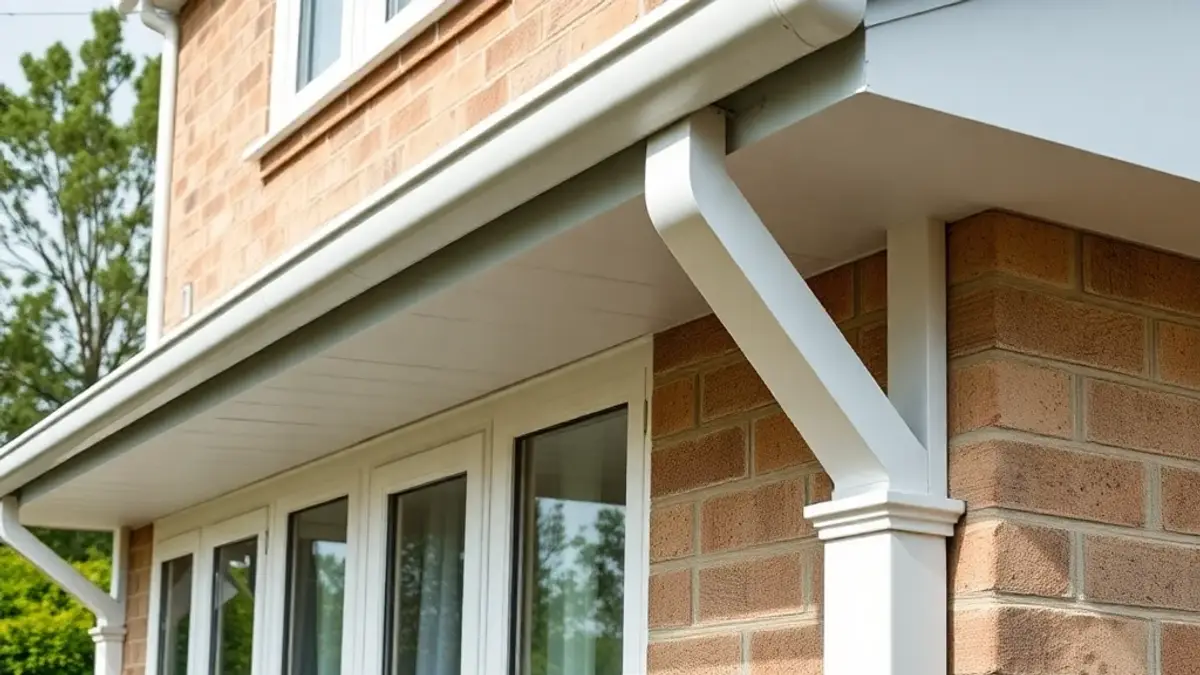
Fascias and Soffits Explained: What They Do and When to Act
Most people see their fascias and soffits every day without knowing their names. They sit at the roof edge, just above the walls. Yet they do a lot of quiet work for your home.
This guide explains what each part does and what can go wrong. It also helps you decide between cleaning, repair and replacement. Because the two work as a pair, it helps to know both.
What is a fascia?
The fascia is the long board that runs along the lower edge of the roof. It caps the ends of the rafters and holds the gutter in place. Without a sound fascia, your gutters have nothing solid to fix to. Without it, the roof edge would stay open to weather and pests.
Older homes often have timber fascias. Newer ones usually have uPVC, which does not rot but can fade or crack. Some homes use aluminium or composite boards too. However, each material has its own weak spots.
Because the gutter hangs from it, the fascia carries real weight. A gutter full of wet debris pulls on the board and its fixings. Therefore, a blocked gutter and a weak fascia often go hand in hand.
What is a soffit?
The soffit is the flat panel under the roof overhang. It spans the gap between the top of the wall and the back of the fascia. It keeps weather, birds and insects out of the roof space. Because it sits out of sight, owners rarely check it.
Many soffits include small vents. These let air flow into the loft, which keeps the roof timbers dry. Government guidance on ventilation in Approved Document F explains the wider principles of airflow in buildings, and roof vents form part of that picture. Since fresh air keeps timber dry, these vents matter.
If vents clog with dirt or paint, air flow drops. As a result, moisture can build up in the loft and feed mould.
How damage shows up
Both parts face the weather all year. Rain, frost, sun and moss all take a toll. The signs are easy to spot from the ground. However, you can often spot trouble early from the ground.
Look for these warning signs:
- Peeling paint or flaking varnish on timber boards.
- Soft, dark or crumbling wood.
- Cracks, warping or gaps in uPVC.
- Green or black staining along the board.
- Gutters that sag or pull away from the wall.
- Birds or insects entering the roof space.
Watch for water marks too. Dark streaks below a joint often mean a leaking gutter is soaking the board. Moreover, rot can spread behind the surface, so a small mark may hide a bigger problem.
Cleaning: the first step
Cleaning is the simplest way to extend the life of both parts. Dirt, algae and moss hold moisture against the surface. A gentle wash removes it and brings uPVC back to a bright finish. Since dirt holds damp against the surface, a regular wash pays off.
Use warm soapy water and a soft brush for light grime. Avoid harsh chemicals and high pressure, as they can mark the surface and force water behind the boards. Work from the ground or a stable platform. Because a gentle approach protects the finish, patience helps here.
The Health and Safety Executive advises that you should only use a ladder for short, low-risk tasks. Fascias sit right at the roof edge, so access is often awkward. For that reason, many owners prefer to book a professional fascia and soffit cleaning visit, which covers the boards and the vents together.
Cleaning also lets you inspect the boards. A tidy surface makes cracks and soft patches easier to see. In particular, check the joints, where water tends to enter.
When to repair and when to replace
Small faults can often be repaired. A few cracked sections of uPVC or a small patch of soft timber may need only a local fix. Repairs make sense when the damage is limited and the rest of the board is sound. However, repair only works while the underlying timber stays sound.
Replacement is the better choice when:
- Rot has spread along a long run of timber.
- Boards have warped and no longer sit flat.
- Gutters keep pulling away because the fixings have nothing to grip.
- Water has entered the roof space.
Replacing the fascia is also a good moment to renew the gutter. The two are fixed together, so it is often easier to do both in one visit. Our fascia and soffit replacement page explains what the process involves. Although this adds to the work, it saves a second visit later.
Ask your installer about ventilation. New soffits should keep or improve the airflow in the roof space. If a quote leaves vents out, ask why. Because poor airflow causes damp, this question matters.
Local conditions and routine care
Where you live shapes the wear on your roof edge. In Cardiff, regular rain keeps timber and uPVC damp for long spells. Likewise, a north-facing terrace in Newcastle may stay shaded and wet through winter. For example, constant damp speeds up paint failure on timber.
That does not mean every home there has trouble. It does mean an annual look is wise. Our pages on gutter cleaning in Cardiff and gutter cleaning in Newcastle cover what local teams see most often. However, a yearly look is cheap and quick.
Moss on the roof often leads to damp boards below. Our guide to moss on roofs and gutters explains how the two problems link. If you are replacing boards anyway, read about the main options in uPVC, aluminium and cast iron gutters. Finally, damp near the roof edge can spread inside, so see damp walls and blocked gutters. Similarly, a blocked gutter soaks the board behind it.
Get an expert view
You do not need to guess. A professional can check the boards, the vents and the gutters in one visit. They will tell you whether a clean, a repair or a replacement fits your home. Because each home differs, a site check gives the clearest answer.
You can request a quote and describe what you see. Photos help, though they are not essential. Early action usually costs less than waiting for rot to spread.
Frequently asked questions
What is the difference between a fascia and a soffit?
The fascia is the board that runs along the roof edge and holds the gutter. The soffit is the panel under the overhang that closes the gap between the wall and the roof. Both protect the roof timbers from weather.
How often should fascias and soffits be cleaned?
Once a year is a sensible routine for most homes. Homes near trees or in damp, shaded spots may need a second wash. Cleaning also gives you a chance to spot cracks and rot.
Can I paint over damaged fascia boards?
Paint will not fix rotten timber. Soft, crumbling or split wood needs repair or replacement first. Painting over damage traps moisture and makes the rot worse.
Do soffits need ventilation?
Yes, in most cases. Vented soffits let air move through the roof space, which helps stop condensation and mould. Blocked vents can lead to damp in the loft.
Sources
- gov.uk https://www.gov.uk/government/publications/ventilation-approved-document-f
- hse.gov.uk https://www.hse.gov.uk/work-at-height/ladders/when-how-to-use-ladders-safely.htm