The Best Time of Year to Clean Your Gutters in the UK
There is no single perfect date for gutter cleaning. The best time depends on your trees, your roof and your weather. Even so, the UK year has clear patterns you can plan around. However, the UK year has clear patterns, so you can plan with confidence.
This guide explains what each season brings and when to book. It also shows how to build a calendar that fits your home.
Why timing matters
Gutters catch debris all year. A clean at the wrong time can leave you with a full channel just before a storm. A good schedule keeps water flowing when it matters most. Because debris builds up in every season, timing makes a real difference.
The Met Office climate averages show that rain falls in every month across the UK, and many regions see more of it in autumn and winter. That is the time your gutters work hardest. Therefore, a clear system by early winter is a sound goal.
Safety also drives timing. The Health and Safety Executive advises that ladders suit short, low-risk jobs, and ice, wind and wet surfaces raise the danger. Choosing a mild, dry day helps whoever does the job. Since a fall can change your life, caution always beats speed.
Autumn: the key clean
Autumn is the most important season for gutters. Leaves fall from deciduous trees, and wet weather packs them into a thick mat. Left alone, that mat blocks outlets before the winter rain arrives. Moreover, one good autumn clean often prevents most winter trouble.
Aim for late October to mid-November in most areas. By then most leaves have dropped, so one visit clears the bulk. If you clean too early, a second round of leaf fall may undo your work. However, trees differ, so adjust the date to what you see outside.
Trees vary, so watch your own. Oak and beech hold leaves longer than birch or sycamore. Consequently, a street of mixed trees may need a clean in November and a quick check in December.
Autumn also suits a wider check. Look at brackets, joints and the roof edge while you are there. Small repairs now prevent bigger ones in a freezing spell.
Winter: check, do not climb
Winter is a time for observation. Watch the gutters during heavy rain and note where water spills. A short list of problems helps you plan the spring visit. Because rain is heaviest then, you learn a lot by watching.
Avoid ladder work during frost, ice or strong wind. If a blockage causes a serious overflow, a professional with proper access can help. Otherwise, wait for better weather. Although a blocked gutter feels urgent, a safe day is worth the wait.
In colder parts of the country, such as Edinburgh and Glasgow, frost can linger well into the spring. Water that freezes in a blocked gutter adds weight and can crack joints. Our pages on gutter cleaning in Edinburgh and gutter cleaning in Glasgow explain how local teams handle the seasons.
Spring: clear the winter debris
Spring is the second best time to clean. Winter leaves silt, moss fragments and twigs in the channel. A spring visit clears them before summer storms arrive. Therefore, a spring visit pairs well with an autumn one.
Spring also brings new growth. Seeds from sycamore and ash trees drop into gutters, and birds start to nest. A clear channel now stops problems later. Since nesting birds arrive early, check before the season gets busy.
If your roof has moss, spring is a good moment to deal with it. Our guide to moss on roofs and gutters explains why the two problems go together. Meanwhile, a clean gutter makes it easier to spot early damage.
Summer: a quick look
Summer is quiet for most homes. Dry weather makes the job pleasant, but there is less debris to clear. A short check is often enough. Still, a quick look costs nothing and can save a flood later.
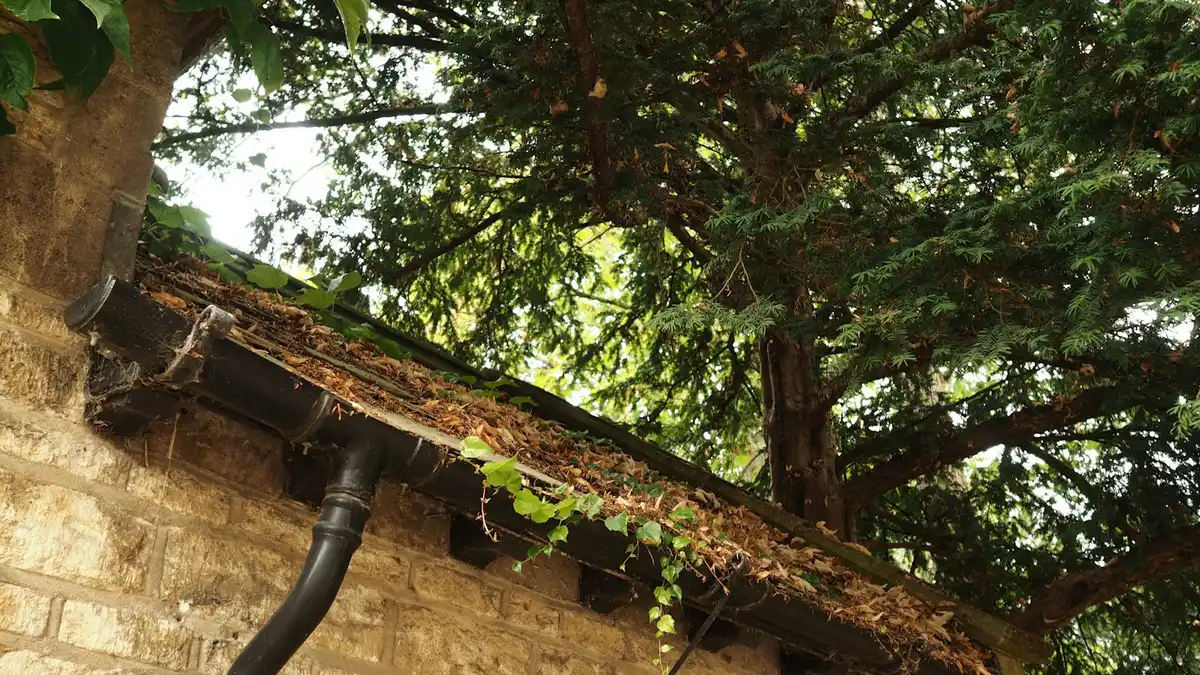
Homes with pine, cedar or other evergreen trees are the exception. They drop needles and cones all year, so they may need an extra visit in summer. The same goes for properties close to large plane trees, as seen in many London streets, which shed seed balls and bark. For example, a conifer by the fence can drop needles in July.
Summer storms can also surprise you. A sudden downpour on a blocked gutter causes a flood as quickly as any winter rain. A quick look from the ground after hot, dry spells is a cheap safeguard.
Build a calendar that fits
A simple year plan works for most homes:
- Late autumn: full clean and inspection.
- Mid-winter: ground check after storms.
- Spring: full clean of winter debris.
- Summer: quick check, plus extra visits for evergreens.
Adjust it to your own site. Homes under trees may need more visits. Homes with gutter protection may need fewer, though our post on gutter guards explains why guards do not remove the need for checks. Meanwhile, keep notes after each visit so the plan improves each year.
For a deeper look at frequency, read how often you should clean your gutters. If you would rather not manage the calendar, a maintenance contract sets regular visits and takes care of the booking. Our standard gutter cleaning service also suits one-off needs.
London and city homes
City homes face their own pattern. Tall buildings shade roofs and trap damp, and street trees drop leaves into gutters at height. Our page on gutter cleaning in London covers the typical access issues in dense streets. As a result, access and timing often need more thought.
Whatever your location, the aim is the same. Keep the channel clear before the wet months, check after storms and fix small faults early. When you want help with the schedule, you can request a quote and tell us about your trees and roof. Because small faults grow, an early fix usually costs less.
Frequently asked questions
Is autumn or spring better for gutter cleaning?
Both help, and most homes benefit from a clean in each. Late autumn clears fallen leaves before winter rain and frost. Spring removes winter debris and prepares the system for summer storms.
Can I clean gutters in winter?
You can, but frost and ice make ladder work dangerous. Wait for a dry, above-freezing day, or ask a professional who has the right access equipment. Never climb onto icy surfaces.
Should I wait until all the leaves have fallen?
Waiting for the last leaves saves repeat visits. In most areas that means late October to mid-November, though trees differ. Evergreens and conifers drop debris all year, so they need a different schedule.
How often does a maintenance contract visit?
That depends on the plan you agree. Many follow the seasons, with visits in spring and autumn. Ask what each visit includes before you sign.
Sources
- metoffice.gov.uk https://www.metoffice.gov.uk/research/climate/maps-and-data/location-specific-long-term-averages
- hse.gov.uk https://www.hse.gov.uk/work-at-height/ladders/when-how-to-use-ladders-safely.htm