How Often Should You Clean Your Gutters? A UK Guide
For most UK homes, one gutter clean a year is the minimum. Twice a year suits properties with trees close by, because leaves and seeds fall in two waves. This guide shows you how to work out the right rhythm for your own house.
Why the schedule matters
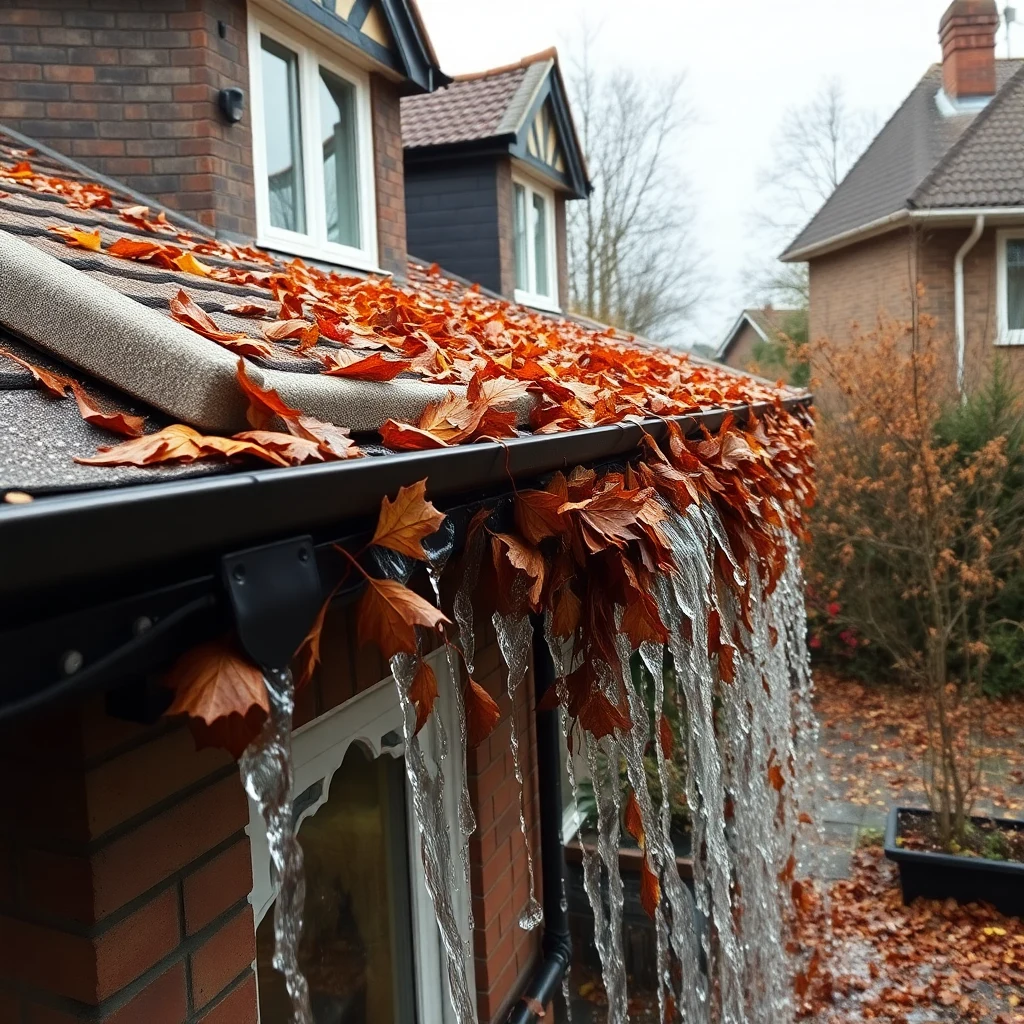
Gutters have one job, which is to carry rainwater away from your walls. Leaves, moss, grit and roof debris slow that flow, and once water has nowhere to go, it spills over the edge. The wall below then takes the soaking.
The damage builds slowly, so you may not notice it for months. Damp patches, peeling paint and stained brickwork usually appear before most owners think about the gutters. A regular schedule stops the problem long before that point. Our guide to the signs your gutters need cleaning lists what to look for between visits.
Water that pours down a wall can also reach the damp-proof course and the ground beside your foundations. For that reason, a blocked gutter often shows up first as a wet wall indoors. Our guide to damp walls and blocked gutters explains how to tell the two apart.
The baseline: once a year
Once a year works for a house with a clear roof and no big trees nearby. The best time is late autumn or early winter, since most leaves have fallen by then. If you have to pick a single month, aim for November.
A single visit still leaves gaps, however. Spring blossom, seed pods and wind-blown debris collect over the summer. That is why many owners add a light check in spring, because a small blockage grows fast once autumn arrives. Our guide on the best time of year to clean gutters walks through the calendar in more detail.
Twice a year: when trees and moss call for more
Trees are the biggest factor, because they drop leaves in autumn and seeds or catkins in spring. Oak, sycamore, beech and birch all behave this way. Pines shed needles all year, and these pack into narrow outlets very quickly. If a branch hangs over your roof, plan for two visits a year.
Moss is the next factor. Shaded, north-facing roofs hold moisture, so moss grows and then sheds into the gutter below. A mossy roof also sends granules and debris down with every shower, which means it needs attention at both levels.
Rainfall and weather in your area
The Met Office publishes long-term climate averages for every UK region. The west of the country gets more rain than the east, according to those averages. Heavy rain tests a gutter harder, since a partly blocked channel overflows sooner. Homes in wetter areas therefore gain more from a regular clear-out.
Glasgow, Cardiff and Manchester all sit on the wetter, western side of Britain. Our gutter cleaning in Glasgow page, Cardiff gutter services and our Manchester page give local details for each area. A drier town still needs cleaning, although the trees nearby matter more than the rain there.
Other things that change the schedule
Several smaller factors can shorten or lengthen the gap between cleans, so check which of these apply to your home.
- Roof type. Tiled and slate roofs shed grit as they age, and it settles in the gutter.
- Gutter fall and joints. A gutter with sagging sections holds water, so debris never flushes out.
- Nearby building work. Dust and plaster fall into gutters during renovations.
- Gutter guards. Guards cut the amount of debris, yet fine grit still passes through.
- Flat or low-pitch roofs. These drain slowly and hold more silt.
If any of these apply, add a mid-year check. A quick look from the ground after heavy rain tells you a lot, because you can see water pouring over the edge or running down the wall.
DIY or professional?
You can clear a low single-storey gutter yourself with the right kit. The Health and Safety Executive advises that ladders suit only short, light tasks, and that you keep three points of contact. Their guidance is worth reading before you climb, since falls from ladders cause many injuries at home.
Upper floors, awkward roofs and fragile conservatory runs call for a trained team. A professional visit with our gutter cleaning service covers the whole run of guttering and flushes each downpipe. You also get a written report, which helps if you ever need to show your maintenance history.
What a professional visit involves
A professional visit starts with a check from the ground, so the team can plan the safest access. The operatives then clear the full run of guttering, working along each section and removing the debris. Next, they flush every downpipe to confirm that water drains freely. Finally, they look over brackets, joints and fixings, and note anything that needs repair.
Most visits take between 45 minutes and three hours. The time depends on the size of the house, the number of storeys and how clogged the gutters are. Because every property differs, the price follows the job, so ask for a firm price in writing before any work starts.
A simple yearly calendar
A short calendar keeps the job easy to remember. Late autumn is the main clean, since most leaves have fallen by then. Early spring is the light check, which catches blossom, seeds and winter debris. After any named storm, take a look from the ground, because high winds shift a lot of material in one night.
If you use a contract, the visits happen without any reminders from you. If you book by hand, set a phone alert in October and again in March. Either way, the aim is the same, which is clear flow before the wet months.
Take the guesswork out with a contract
Forgetting to book is the most common reason gutters get missed. A gutter maintenance contract fixes that by putting the visits in the diary for you. We cover whether that route pays off in our guide on whether a gutter maintenance contract is worth it, although one-off cleans remain a fair choice if you prefer to decide each year.
Getting started
Work out your tree cover, check your roof, and pick once or twice a year. Then put a date in the diary for late autumn, while the weather is still dry enough to work safely. If you want a fixed price for your property, send your details through the quote form and ask for the cost to be confirmed in writing before any work starts.
Frequently asked questions
Is once a year enough for gutter cleaning?
For a house with no overhanging trees, once a year is a sound minimum. Late autumn is the best slot, because most leaves have fallen by then. Homes under trees need a second visit in spring.
Do gutters need cleaning after a storm?
Yes, a quick check is wise, since storms strip twigs and leaves from trees and drive them into gutters. Look for overflow during the next downpour. If water spills over the edge, book a clear-out.
Can I clean gutters too often?
Cleaning more often does no harm to the gutters, although it costs more than your home needs. Match the schedule to the trees, roof and rainfall around you.
How long does a gutter clean take?
A terraced house usually takes 45 to 60 minutes, while a large detached or three-storey home can take two to three hours. Condition and access change the time. A quote request gives you a firm answer for your property.
Sources
- metoffice.gov.uk https://www.metoffice.gov.uk/research/climate/maps-and-data/location-specific-long-term-averages
- hse.gov.uk https://www.hse.gov.uk/work-at-height/ladders/when-how-to-use-ladders-safely.htm
- gov.uk https://www.gov.uk/government/publications/drainage-and-waste-disposal-approved-document-h