5 Warning Signs Your Gutters Need Cleaning Now
Gutters rarely fail without warning. Most blockages send out signals for weeks before real damage starts, and you can spot them from the ground. These five signs tell you when to act.
Sign 1: water spills over the edge
The clearest sign is water pouring over the front lip of the gutter during rain. A healthy gutter carries water to the downpipe, so any spill means something is in the way. Leaves, silt and moss are the usual causes.
Check at the heaviest point of a shower, because a light drizzle can hide the problem. Look along the whole run, and note where the spill is worst. That spot often marks the blockage, or a low section where water pools. Our guide on overflowing gutters, their causes and fixes covers the other reasons water leaves the channel.
Sign 2: plants growing in the gutter
Grass, weeds and small saplings in a gutter show that debris has turned into soil. Seeds land in the damp mix and then take root. Although a few green shoots look harmless, the roots trap water and cause trouble.
Moss on the gutter edge tells the same story. A wet, shaded gutter holds moisture for days after the rain stops. As a result, the channel gets heavier and the joints weaken.
Sign 3: sagging or pulling away
A gutter full of wet debris is heavy. The extra weight pulls on the brackets, so the run starts to dip or lean away from the wall. Once it sags, water pools in the low point and the problem repeats.
Stand back and look along the line of the gutter. It should have a gentle, even fall towards the downpipe, while a clear dip or gap near the fascia needs attention. Sagging can also come from old fixings or tired fascia boards. That is why a trained eye matters, since a clean alone will not cure a weak bracket.
Sign 4: damp, stains and streaks on the walls
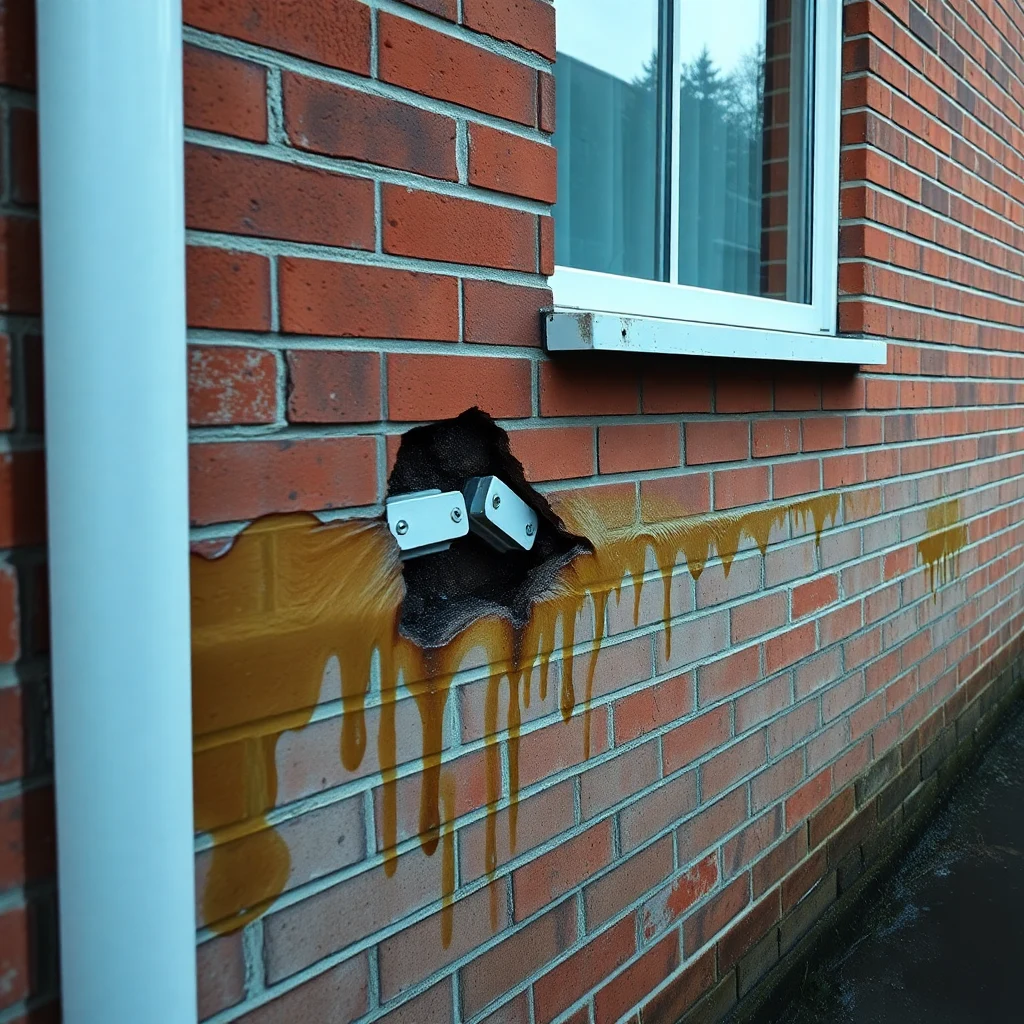
Dark streaks below the gutter line mean water is running down the wall instead of into the pipe. Over time you may see green algae, peeling paint, or damp patches inside the house. In winter, the same water can freeze and crack mortar.
Internal damp near an outside wall deserves a quick check of the gutter above it. The cause is not always the gutter, yet it is one of the easiest causes to rule out. Our guide to damp walls and blocked gutters explains how to tell the difference.
Sign 5: birds, insects and pests
Birds nest in debris-filled gutters, and wasps or other insects sometimes follow. A pile of old leaves is a warm, sheltered home for them. If you see birds going in and out, or you hear scratching, the gutter is holding more than it should.
Take care in spring, since the Wildlife and Countryside Act protects nesting wild birds. If a nest is active, wait until the young have left before any clearing starts. Otherwise a professional team can plan the visit around it.
How to check safely
You do not need a ladder to look for any of these signs. Walk round the house on a dry day, and stand far enough back to see the whole roof edge. A pair of binoculars helps you spot plants, sagging and gaps, while a phone camera zoom works almost as well.
Then repeat the walk during a downpour, wearing a waterproof coat. Watch the joints and the downpipe tops, because that is where leaks and overflows show up first. If you can hear water gurgling or splashing at the wall, that is a strong hint of a blockage.
Why autumn and winter make it worse
Leaves fall in autumn, so gutters fill just as the wettest months begin. A blocked channel then faces weeks of heavy rain, which makes small problems grow. In cold snaps, the trapped water can freeze, and ice adds weight that strains the brackets.
That is why a check in October or November pays off. If you catch a blockage then, you avoid a winter of overflow. The Met Office climate averages show how wet and cold the UK winter can be, so it makes sense to go into it with clear gutters.
What to do next
Start with a ground-level check after the next rain. Write down what you see and take a few photos, because they help a professional judge the job. If you spot one sign, the gutter probably needs a clean. If you spot several, book soon.
For a low, single-storey roof you might clear the debris yourself. The Health and Safety Executive stresses that you should keep ladder use short and always work with a secure footing. For anything higher, the safer choice is a trained team, so take a look at our gutter cleaning service.
When a clean is not enough
Sometimes a clean reveals a deeper problem, such as a cracked joint or a loose bracket. That is where a gutter inspection helps. A written report with photographs shows you the condition of every section, so you can decide what to fix and what to leave alone.
Older homes in big cities often have worn gutters, because they have faced many decades of weather. If you live in London, our page on gutter cleaning in London gives local details for the capital. The same goes for gutter cleaning in Birmingham, where homes vary widely in age and size.
How often to check
Make a habit of looking at your gutters twice a year, and after any named storm. Most households find autumn and spring the easiest times to remember. Our guide on how often to clean gutters helps you set a schedule that suits your trees and roof.
Get a fixed price
If you recognise any of these signs, send your details through our quote form. Ask for a firm price in writing before any work starts, so there are no surprises on the day.
Frequently asked questions
How can I tell if my gutters are blocked without climbing a ladder?
Watch the gutters during heavy rain from the ground. Water that spills over the front edge, drips from joints or runs down the wall points to a blockage. You can also check the ground below for splash marks and puddles.
Can plants growing in a gutter cause damage?
Yes. Roots and seedlings hold water and add weight, so brackets can bend and joints can open. Remove the growth early, because it spreads once the gutter holds a layer of soil.
Is a sagging gutter always a cleaning problem?
Not always. A full gutter is heavy and pulls on its brackets, but old fixings and rotten fascia boards can also cause sagging. An inspection tells you whether a clean is enough or a repair is due.
How quickly should I act on these signs?
Act within a few weeks if you can, because the next heavy rain will make any overflow worse. If water is entering the house, treat it as urgent and arrange a visit as soon as you can.
Sources
- hse.gov.uk https://www.hse.gov.uk/work-at-height/ladders/when-how-to-use-ladders-safely.htm
- gov.uk https://www.gov.uk/government/publications/drainage-and-waste-disposal-approved-document-h
- legislation.gov.uk https://www.legislation.gov.uk/ukpga/1981/69/contents
- metoffice.gov.uk https://www.metoffice.gov.uk/research/climate/maps-and-data/location-specific-long-term-averages